
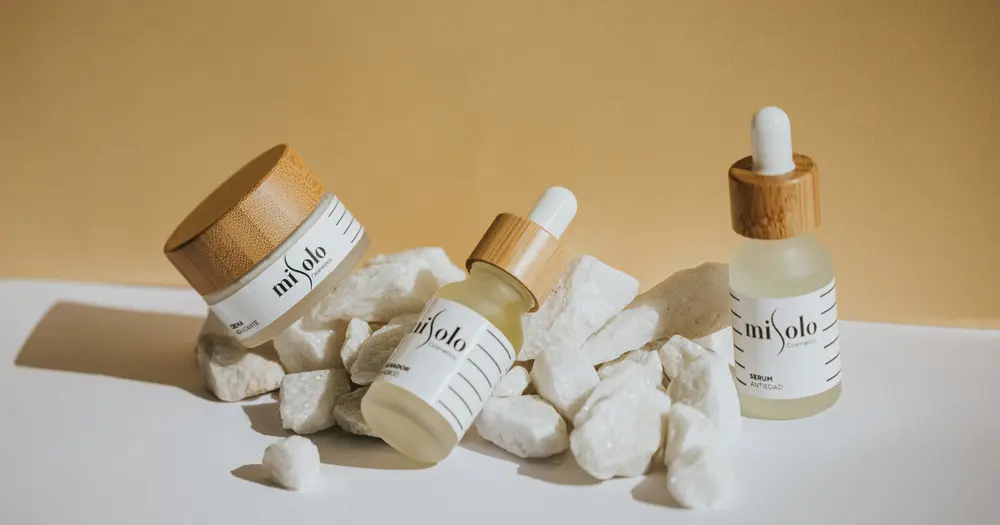
White label cosmetics are ready-made formulas that a manufacturer sells to many brands, which add their own label. Private label cosmetics are made for one brand, usually with a customized formula, packaging or both.
The main difference: White label is the faster, lower-cost way to launch; private label costs more up front but gives you a product competitors can’t buy.
Below, we compare all three on cost, minimums, control, timelines and compliance so you can choose the right path.
(Psst, there’s also a third route: custom formulation, where a lab develops a new formula for your brand. We’ll talk about that, too!)
What is White Label Cosmetic Manufacturing?
White label cosmetic manufacturing ends in a finished, pre-formulated product that a manufacturer produces in volume and sells to multiple brands. Each brand adds its own label and sometimes its own container, but the formula is the same.
Many people are surprised to learn that beauty products from different brands can contain the exact same elements. With white labeling, estheticians, salon owners, and online sellers can build a beauty brand without investing in packaging, manufacturing, and formulation. This is a great way to get your foot in the door if you’re hoping to start your own company.
Small start-up companies can benefit from this approach because there’s no development cost, economical minimums, or supply concerns. White label companies keep a stockpile of products at all times; all brands have to do is label and package them! The producers still follow the same rules and regulations any product would have to; these products are just as secure and potent as any other.
Pros
- Fastest path to market: the formula is already developed, tested and in production
- Lowest up-front cost, with no development fees
- Lowest minimum order quantities
- Proven formulas with existing stability data
Cons
- Little differentiation: other brands can sell the same formula
- You don’t own the formula
- Limited changes to ingredients, scent or texture
- Harder to support a premium price or a distinct brand story
What Does Private Label Mean?
Private label is when products are created by a manufacturer, and they allow companies to sell these products under their own brand name. Private label manufacturers remain in control over their products, they still manage the specifications and quality of the products. The company and products are still certified (although if they wanted to rebrand they would need independent authorization.)
Private label manufacturers create and package many of the products you see online and in stores. For instance, cosmetic labs will suggest business-to-business solutions for a brand to make its own commodities. Some even offer the creative side of things and will design and create unique packaging. Private label labs reinforce the direction of your brand to give it the vitality to meet intended morals, aspirations, and principles. Private label labs give you the ability to recreate your formula to give your product a unique selling proposition or to move in a particular trend direction, quickly and effectively.
Pros
- A differentiated product without starting from zero
- More control over ingredients, fragrance, texture and packaging
- Faster and less expensive than full custom development
- Easier to support a selling point such as fragrance-free or a signature active
Cons
- Higher minimums order quanities and up-front cost than white label
- Longer timeline for sampling, approvals and stability testing
- Formula ownership depends on your contract; the manufacturer often keeps rights to the base formula
To Read: Why Hire a Private Label Skincare Company?
What is Custom Formulation?
Custom formulation is when a lab develops a new formula to your brief and produces it. It offers the most control and differentiation, but requires the highest investment and longest timeline. Brands usually choose it when the formula itself is their competitive advantage.
Learn more about FP Lab’s custom formulation process.
How to Choose: 5 Questions to Ask Yourself First
- How much can you invest before your first sale? If budget is tight, start with white label and reinvest once products sell.
- How fast do you need to launch? White label can ship faster; private label and custom formulas need time for sampling and stability testing.
- How important is a unique formula to your brand story? If your customers buy because of a specific ingredient or result, private label or custom is worth the cost.
- How many units can you sell and store? Higher minimums mean more cash tied up in inventory. Match your order to realistic first-year sales.
- Do you need to own the formula? If you plan to switch manufacturers or sell the brand later, negotiate formula ownership or choose custom formulation.
Partner With FP Labs
FP Labs strives to provide the most valuable products for your brand, developing and manufacturing:
- Lip products
- Deodorants
- Sunscreens
- Creams, face lotions,and body lotions
- Anti-chafe products
- High-performance serums
- Hair products
- Nail care products (excluding nail polish)
- Body wash
- Shave cream
- Facial cleansers
- Facial serums
- Facial toners
- Pet products
- Baby products
Our chemists work with brands at every stage: start with a proven stock formula, customize it into a private label product, or develop a custom formula from your brief. We also handle blending, filling, quality assurance and containers.
Ready to begin the next phase of your journey? Reach out to our team and let’s get the conversation started!
Frequently Asked Questions
Is private label or white label more affordable?
White label is usually more affordable to start because there are no development costs and minimums are lower. Private label costs more up front for customization and sampling, but it often supports a higher retail price.
Can I customize a white label product?
Usually only the label and sometimes the container. If you want to change the scent, actives or texture, you are moving into private label territory!
Do I own the formula with private label?
Not automatically. Many manufacturers keep ownership of their base formula, and ownership of customizations depends on your contract. If owning the formula matters, settle it before you sign or choose custom formulation.
What is the minimum order for private label cosmetics?
It depends on the product and packaging. At FP Labs, minimums start at 5,000 units. Learn more about our MOQs.